
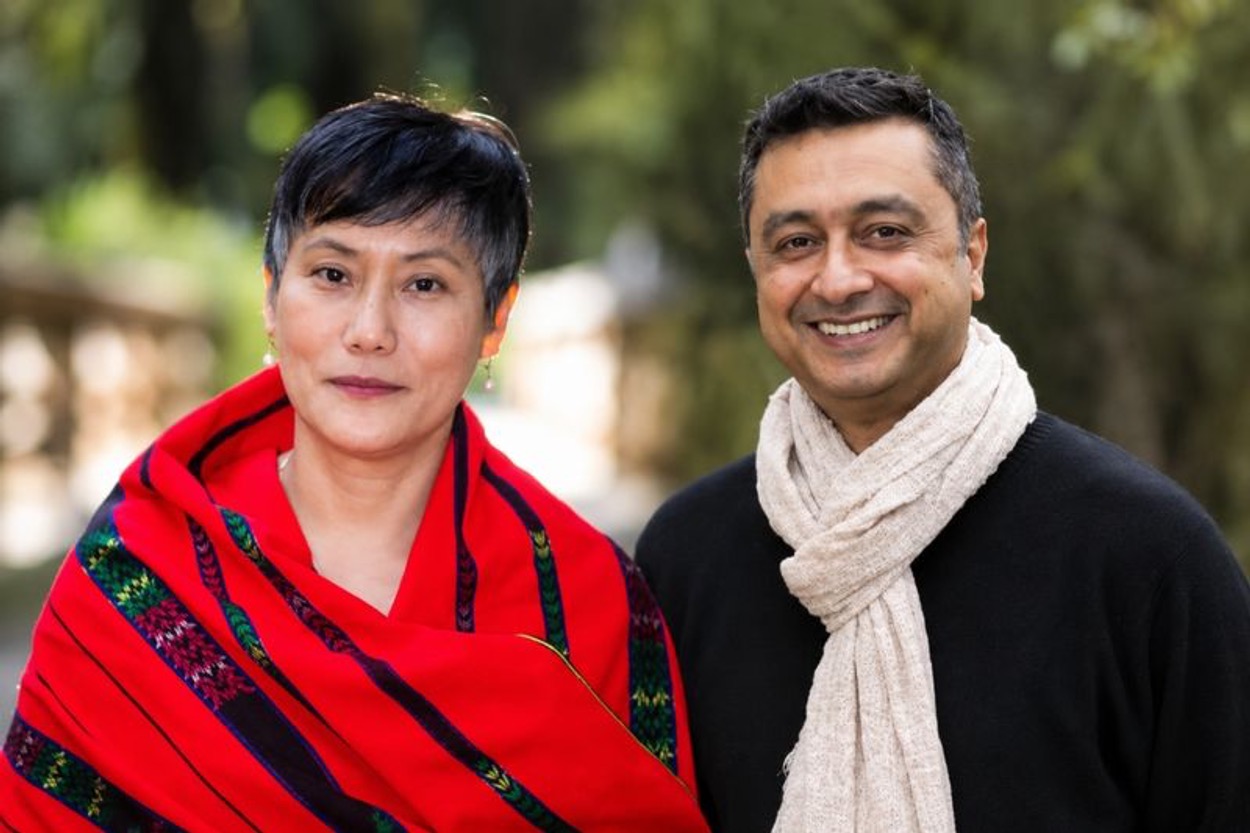

New Delhi: An incident involving noted academic and filmmaker Prof. Dolly Kikon and her husband, Prof. Sanjay Barbora, at Nagaland House in R.K. Puram, New Delhi, has triggered criticism from academics, scholars and civil society members, with calls for an inquiry into the conduct of the staff.
The incident reportedly took place on September 15 following a screening of Kikon’s documentary A Sacred Place, organised by the Naga Scholars’ Association (NSA) at the Conference Hall of Nagaland House. Kikon, a professor and Director of the Center for South Asian Studies at the University of California, Santa Cruz, had been invited as a resource person for the programme. Barbora, also an academic at the University of California, Santa Cruz, accompanied her.
Dispute after the programme
According to accounts published by several news organisations, the programme itself concluded without major incident. The controversy reportedly began afterwards, when students and scholars remained at the reception area to interact with Kikon and Barbora.
The Naga Scholars’ Association said the gathering had been authorised and that participants were interacting with the invited academics after the screening. A staff member allegedly asked those present to leave, leading to a confrontation after Barbora objected to the manner in which the group was being addressed.
Kikon subsequently described the experience as humiliating. She alleged that she was repeatedly asked to leave despite explaining that she was an invited resource person at the event. Reports also state that Barbora was allegedly challenged to a physical confrontation during the exchange.
Allegation of discriminatory treatment
The incident has also raised concerns about alleged discriminatory treatment of Barbora, who is Assamese.
A report by The Morung Express, citing an NSA scholar, said a staff member allegedly made a remark connected to Barbora’s identity. Kikon also alleged that the treatment of her husband reflected discriminatory behaviour because he is Assamese. These are allegations and have not been independently established.
Nagaland House PRO apologises
Nagaland House PRO Kuolie Mere said he was not present when the confrontation initially began but arrived towards the end of the incident. He described the episode as “very unfortunate” and said he apologised to Kikon and Barbora. He also acknowledged concerns about how staff interact with visitors using Nagaland House.
Academics demand inquiry
The controversy has since attracted wider attention. More than 30 academics, journalists, writers, artists and concerned citizens have called for a transparent inquiry into the incident and sought an apology to Kikon and Barbora.
The signatories also called for better training of public-facing staff at Nagaland House, arguing that a government institution should maintain professional standards while dealing with scholars, students, guests and members of the public.
The Naga Scholars’ Association has also raised the matter with the Resident Commissioner of Nagaland House, expressing concern over the conduct of the staff and seeking appropriate action and staff sensitisation.
Broader questions over conduct at Nagaland House
The episode has sparked a broader discussion over the role of Nagaland House as a public institution representing the state in the national capital. The controversy has centred not only on the alleged confrontation but also on questions of institutional etiquette, visitor management and the treatment of academics and members of the public.
Any further action is expected to depend on an examination of the competing accounts and the findings of the Nagaland government or Nagaland House administration.
This report is based on accounts published by multiple news organisations. Allegations concerning individual staff members have been attributed to the respective sources and should not be treated as established findings unless confirmed by an official inquiry.