
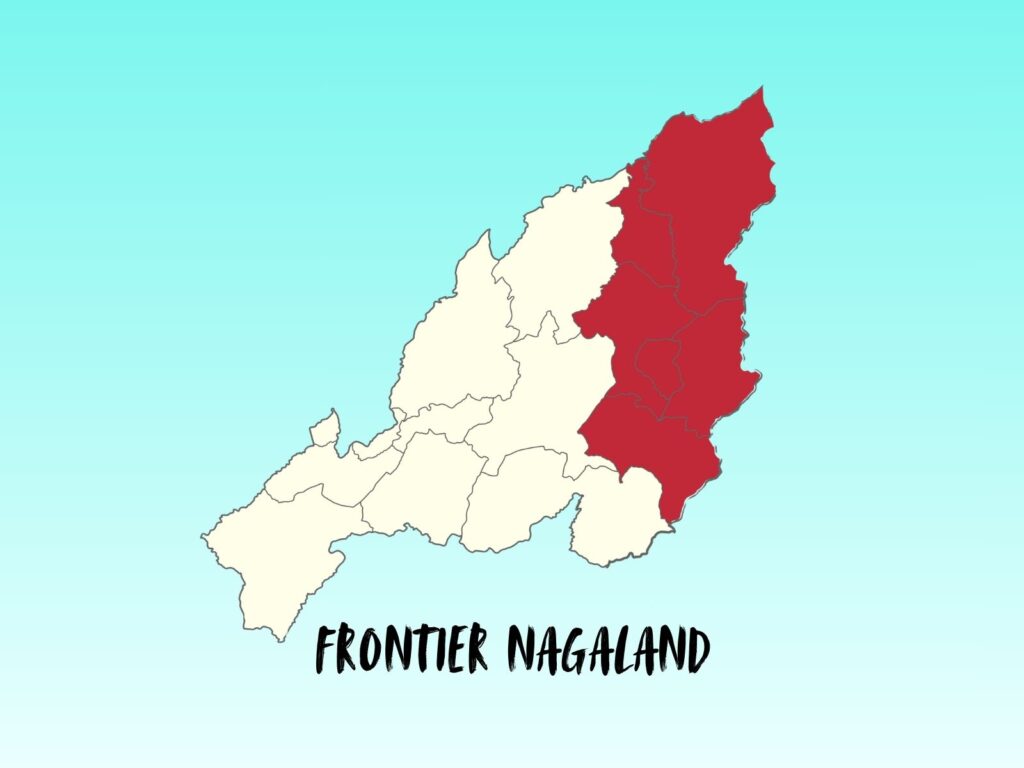
President of India Droupadi Murmu has given her assent to the Frontier Nagaland Territorial Authority (FNTA) Bill, 2026, marking a significant milestone in the establishment of a proposed autonomous administrative authority for six eastern districts of Nagaland.
Nagaland Chief Minister Dr Neiphiu Rio announced the development on October 25, thanking the President for approving the legislation and the Union Ministry of Home Affairs for coordinating the process. He described the presidential assent as a key step towards fulfilling the long-standing aspirations of the people of Eastern Nagaland.
The Nagaland Legislative Assembly unanimously passed the FNTA Bill on September 3, 2026, paving the way for the creation of the proposed territorial authority.
FNTA to Cover Six Eastern Districts of Nagaland
The proposed Frontier Nagaland Territorial Authority will cover six districts: Tuensang, Mon, Longleng, Kiphire, Noklak and Shamator.
The authority aims to strengthen decentralised governance, improve local participation in decision-making and address longstanding developmental disparities in Eastern Nagaland.
Under the proposed framework, powers relating to 46 subjects will be transferred to the FNTA, covering key areas of administration and development, including agriculture, education, healthcare, rural development, tourism, roads, social welfare and other essential services.
The arrangement is intended to enable the region to plan and implement development programmes according to local needs while remaining within the state of Nagaland.
Chief Minister Neiphiu Rio Welcomes Presidential Assent
Chief Minister Neiphiu Rio expressed gratitude to President Droupadi Murmu for granting assent to the Bill and acknowledged the role of the Union Ministry of Home Affairs in facilitating the process.
The FNTA framework follows years of discussions surrounding the demand for greater autonomy and improved development opportunities in Eastern Nagaland.
The Eastern Nagaland Peoples’ Organisation (ENPO), which represents the region’s recognised Naga tribes, has long raised concerns about developmental disparities and the need for a governance arrangement that responds more effectively to local aspirations.
Deputy Chief Minister Yanthungo Patton also welcomed the development, describing it as a historic milestone for Eastern Nagaland.
What Happens After Presidential Assent?
Although presidential assent marks a major constitutional step, the authority’s operational establishment requires further action by the Nagaland Government.
Under Section 1(3) of the legislation, the Act will come into force on a date appointed by the state government through a notification in the Official Gazette.
The next steps include issuing the commencement notification, framing the necessary rules and making transitional arrangements for the authority’s administration.
The legislation provides for an interim governance arrangement before the FNTA is constituted through elections. This transitional period is intended to facilitate the establishment of the authority and the transfer of responsibilities under the new framework.
A Significant Step for Eastern Nagaland
The establishment of the FNTA is intended to address regional development gaps and strengthen local governance across the six eastern districts.
By providing a dedicated institutional framework for planning, administration and development, the authority is expected to play an important role in addressing local priorities, including infrastructure, education, healthcare, employment and economic opportunities.
The arrangement represents an important development in the ongoing efforts to address the aspirations of Eastern Nagaland through decentralised governance within the state.
With presidential assent secured, attention now turns to the Nagaland Government’s implementation process and the steps required to make the Frontier Nagaland Territorial Authority operational.